
About
About Me

My Educational Journey
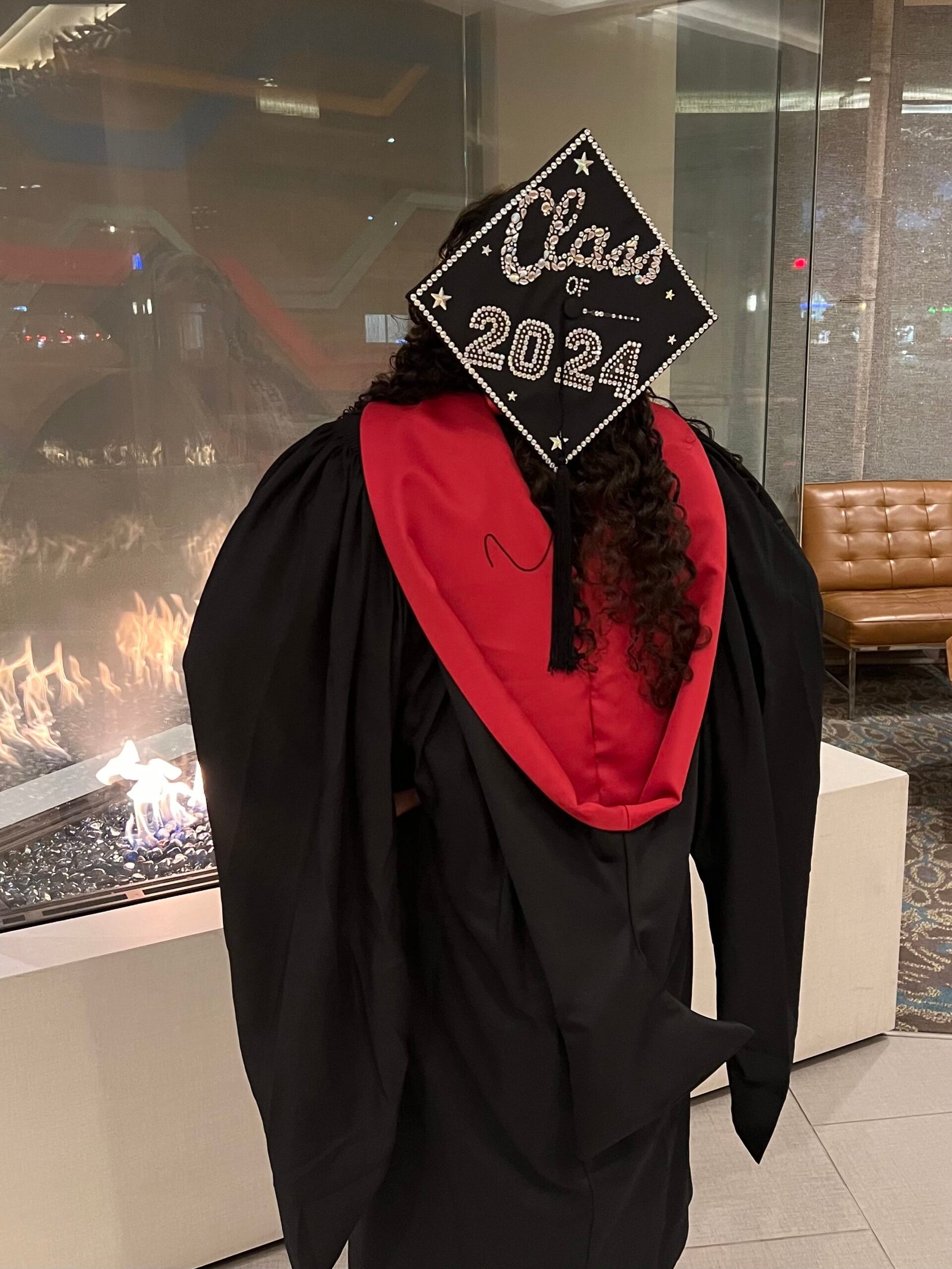
After completing my degree at Florida Atlantic University, I pursued advanced coursework in Industrial–Organizational Psychology through Harvard University’s Division of Continuing Education, where I developed foundational training in psychological research methods. This included coursework in study design, measurement, statistical analysis, and evidence-based evaluation, with an emphasis on understanding how identity, bias, and organizational contexts shape individual experiences of belonging and inclusion.
Through this training, my research interests sharpened and expanded beyond organizational settings toward core questions in social psychology. I became increasingly focused on how individuals navigate identity and authenticity under social evaluation, how structural and interpersonal contexts produce inclusion or exclusion, and how psychological mechanisms influence behavior and well-being across diverse environments. These interests motivated my transition from an applied I/O framework to a theoretically grounded focus in social psychology.
My current interests center on the psychological and structural factors that shape belonging, authenticity, and identity-related experiences. I am particularly interested in examining how social environments influence self-expression, how bias operates through contextual pressures rather than overt intent, and how interventions can be designed to support sustained, meaningful change. I aim to pursue rigorous, theory-driven research that contributes to a deeper understanding of these processes and informs evidence-based approaches to improving lived experiences.


Professional Experience
As an Academic Support Assistant at Mentor Academics, I contribute to educational advocacy initiatives to expand access and support for underserved student communities. My work supports outreach related to federal education policy, with a focus on improving equity and student success in higher education.
A central initiative I support addresses disparities affecting Hispanic/Latino students, particularly gaps in access, retention, and degree completion. Through this work, I directly translate complex policy goals into accessible outreach materials and coordinate communication efforts that connect community members with educational and civic resources.
My contributions include drafting outreach content, supporting signature-gathering and engagement campaigns, and coordinating across advocacy groups and stakeholders. Through this role, I continue to develop a deeper understanding of how structural and policy-level factors shape educational access and outcomes. This ongoing experience informs my interest in studying the psychological and contextual dimensions of inequality, belonging, and institutional support. These dimensions inform my advocacy work and reflect my commitment to translating evidence into practice.
Role Focus & Research-Relevant Skills
Translation of federal and state education policy into accessible outreach materials
Stakeholder coordination across advocacy organizations and community partners
Development of equity-focused engagement and outreach strategies
Exposure to data-informed program evaluation and policy implementation
Ongoing integration of psychological research on belonging, access, and institutional support into applied work
Applied Perspective
My work in education advocacy has grounded my interest in inequality and belonging in real institutional contexts. Rather than encountering these dynamics abstractly, I engage with them through policy constraints, organizational priorities, and the lived experiences of students navigating complex systems.
This role has sharpened my awareness of how access and exclusion are often shaped less by individual intent than by institutional design. Translating policy goals into outreach materials has highlighted the gap between evidence and implementation, reinforcing my interest in research that speaks to real-world environments.
Role Focus & Research-Relevant Skills
Translation of federal and state education policy into accessible outreach materials
Stakeholder coordination across advocacy organizations and community partners
Development of equity-focused engagement and outreach strategies
Exposure to data-informed program evaluation and policy implementation
Ongoing integration of psychological research on belonging, access, and institutional support into applied work
Applied Perspective
Working in educational advocacy has deepened my interest in inequality and belonging within real institutional contexts. Rather than encountering these dynamics abstractly, I engage with them through day-to-day constraints—policy language, organizational priorities, stakeholder incentives, and the lived realities of students navigating complex systems.
This role has sharpened my awareness of how well-intentioned structures can unintentionally reproduce exclusion, and how access, support, and belonging are often shaped more by institutional design than by individual intent. Translating policy goals into outreach materials has also highlighted the gap between evidence and implementation, reinforcing my research interest that addresses real-world contexts rather than remaining purely theoretical.
This applied experience continues to inform how I think about psychological questions of authenticity, identity, and institutional support, and why I am motivated to pursue research that bridges theory and practice rather than treating them as separate domains.